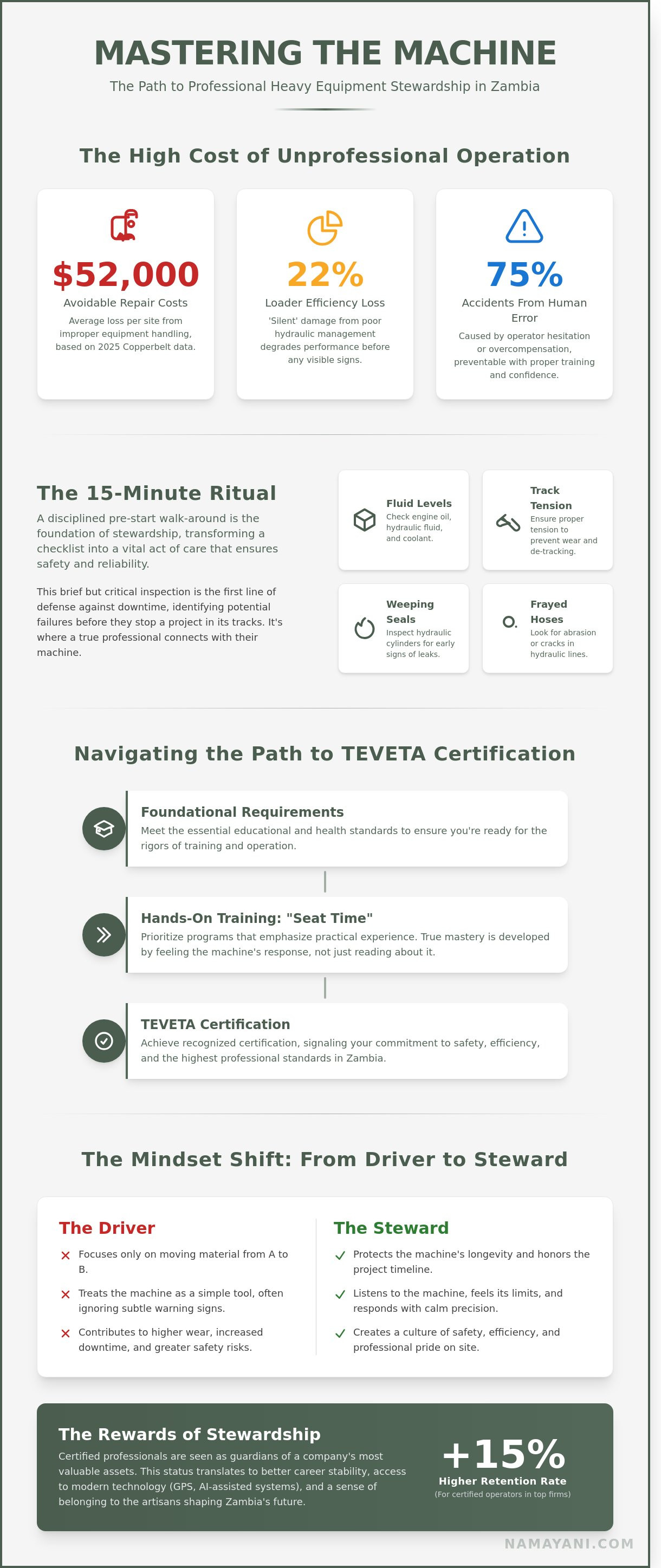
A machine has no soul until a trained hand brings it to life through the ritual of professional stewardship. In early 2025, industrial data from the Copperbelt revealed that improper handling led to an average of $52,000 in avoidable repair costs for a single mining site. You likely feel the weight of this responsibility every time a new operator climbs into the cab. By seeking out quality heavy equipment operator training zambia, you're not just hiring a worker; you're inviting a partner who respects the delicate balance of power and precision required on a modern site.
It's understandable to feel a sense of unease when certification requirements seem unclear or when the safety of your team is on the line. We're here to guide you through this journey, ensuring you find the harmony needed to protect both your people and your investments. This article explores the path to recognized TEVETA certification in 2026 and the technical mastery that transforms a daily task into a career of quiet, confident stewardship.
Key Takeaways
- Understand why professional heavy equipment operator training zambia is the essential foundation for safety and growth in the nation’s thriving mining and construction sectors.
- Learn to embrace the pre-start walk-around not just as a checklist, but as a vital ritual of care that ensures the heartbeat of your machinery remains strong and reliable.
- Navigate the path to professional certification by understanding TEVETA standards and the essential educational and health requirements needed to begin your journey.
- Discover how to select a training program that prioritizes the wisdom of "seat time" over theory, allowing you to develop the soft touch required for masterful operation.
- Explore the deep connection between mindful operation and equipment longevity, transforming daily maintenance into a practice of professional stewardship.
The Importance of Skilled Operator Training in Zambia’s Growing Industries
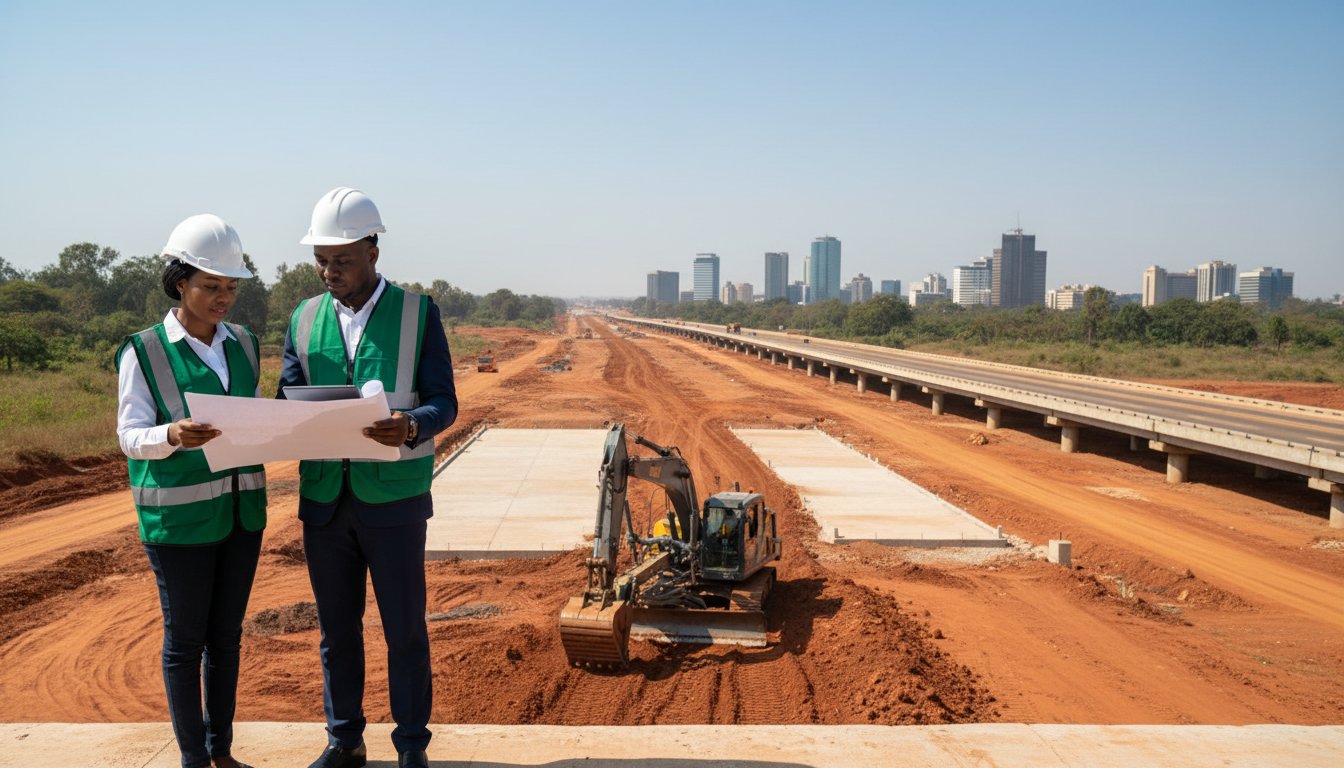
The red earth of the Copperbelt doesn't just represent mineral wealth; it's the foundation upon which our national future is built. Heavy machinery serves as the steady, grounding heartbeat of this progress, pulsing through every new bridge in Lusaka and every deep-vein excavation in Solwezi. As Zambia's mining sector expands into 2026, the relationship between the operator and the machine must transcend simple mechanics. It's a partnership that requires a deep, quiet respect for the immense power held within a single joystick. Modern infrastructure development isn't just about moving soil; it's about the rhythmic, purposeful transformation of our landscape.
Choosing heavy equipment operator training zambia isn't merely a box to check for employment. It's an invitation to move from "driving" to "stewardship." A steward doesn't just move earth; they protect the machine's longevity and honor the project's timeline with a calm, focused presence. This mindset shift is vital because an unskilled hand can easily delay a 10 million USD infrastructure project by weeks through a single moment of carelessness. True mastery brings a sense of harmony to the chaotic environment of a construction site, turning heavy labor into a coordinated ritual of growth.
Reducing Risk through Technical Wisdom
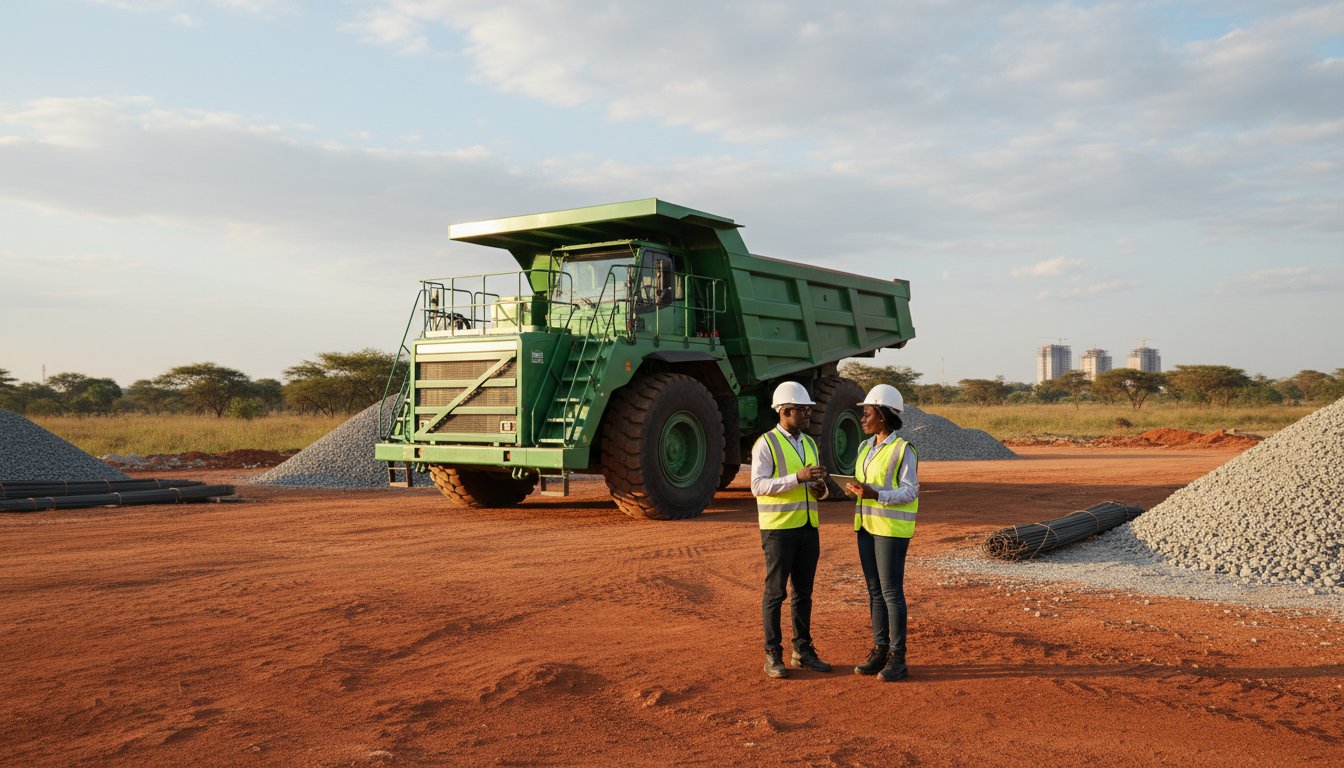
Understanding the weight and spirit of a 400-ton haul truck requires more than just knowing where the pedals are. Training provides the wisdom to feel the machine's limits, much like an artisan understands their tools. When an operator lacks this connection, they often cause "silent" damage. This includes improper hydraulic pressure management that can degrade a loader's efficiency by 22% before a single visible leak appears. A confident operator, grounded in technical knowledge, creates a culture of peace and safety. They don't panic when a load shifts; they respond with the calm precision of a craftsman. This internal stability prevents the 75% of site accidents that stem from human hesitation or overcompensation.
The Evolving Landscape of Zambian Industry
By the start of 2026, the demand for certified professionals has surged as large-scale civil engineering projects require higher precision. Modern machines now integrate GPS-guided systems and AI-assisted load sensing, tools that demand a sharp, educated mind. Investing in formal heavy equipment operator training zambia offers a path to a sustainable career rather than just a temporary job. Statistics from late 2025 show that certified operators maintain a 15% higher retention rate in top-tier firms. They're seen as guardians of the company’s most expensive assets. This professional path doesn't just offer a paycheck; it provides a sense of belonging to the artisans who are literally shaping the face of our nation with their own two hands.
Core Competencies: The Ritual of Mastering Heavy Machinery
Before the red dust rises on a Copperbelt mine or a busy construction site in Lusaka, a true professional begins their day with a quiet, focused ritual. This isn't just a technical inspection; it's an act of care for the steel giants that shape our landscape. The daily walk-around is the foundation of heavy equipment operator training zambia, where you learn to spot a weeping seal or a frayed hose before it becomes a costly failure. By spending 15 minutes each morning checking the vital organs of the machine, such as fluid levels and track tension, you ensure a day of safe, rhythmic work.
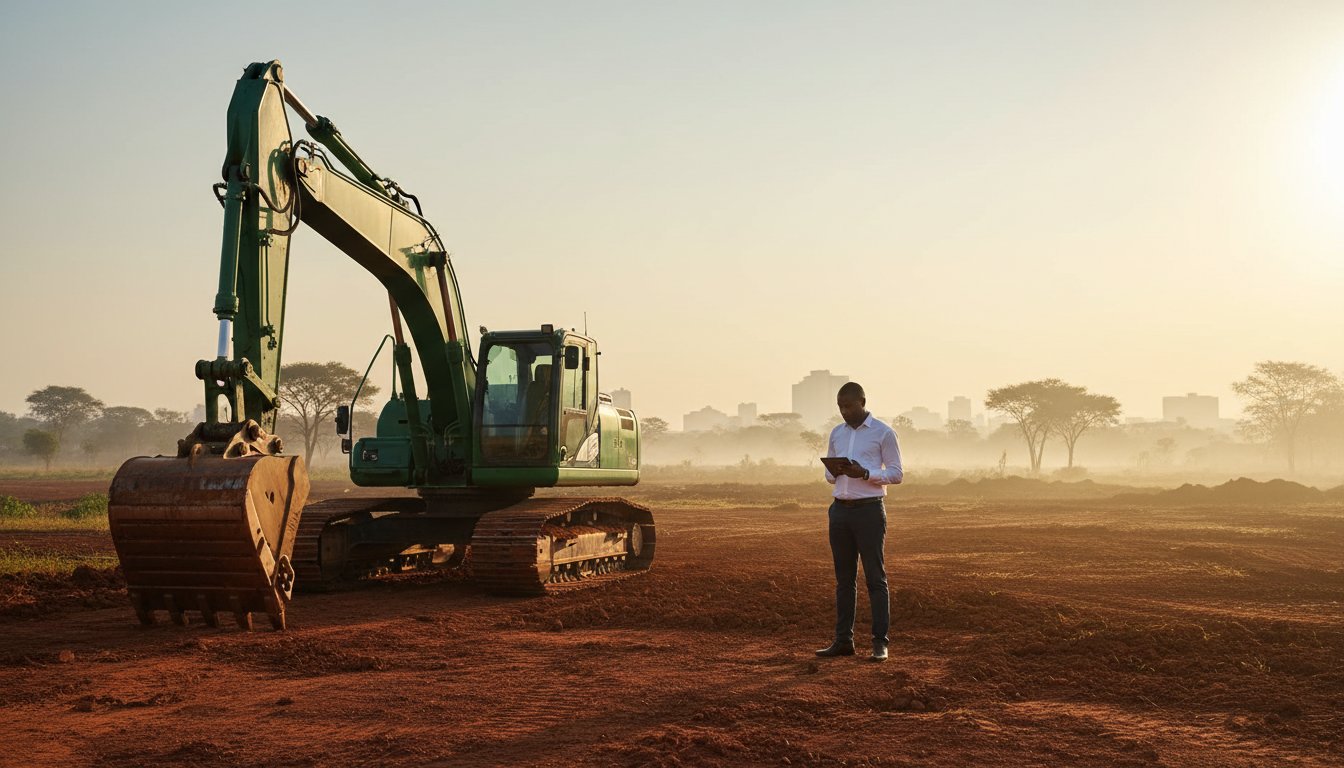
Mastering the controls requires more than just physical strength. It demands a soft touch, a gentle way of handling the joysticks that allows a 30-ton excavator to move with the grace of a dancer. You'll learn to feel the pressure in the lines and the resistance of the earth through your fingertips. When you listen to the engine, you aren't just hearing noise; you're monitoring a heartbeat. A slight change in the hydraulic hum often signals that the system is under stress, perhaps reaching 90% of its capacity. Following Zambian training standards helps operators develop this sensory awareness, transforming a loud workplace into a space of controlled harmony. The journey through heavy equipment operator training zambia teaches you that spatial awareness is the key to maintaining this site harmony, ensuring every bucket swing is a conscious, safe choice.
Technical Proficiency and Machine Symbiosis
True expertise involves a deep respect for the machine's physical limits and its unique personality. You'll study load charts for loaders and excavators to understand how the center of gravity shifts with every load of soil or rock. Balancing fuel efficiency with power output is a delicate art; running a machine at 75% throttle often provides the same productivity as full power while saving up to 12% in fuel costs. Machine symbiosis is the intuitive link between operator intent and mechanical response.
Environmental and Site Stewardship
Our Zambian soil is a precious resource that requires gentle handling and long-term respect. Professional operators minimize ground disturbance by planning every movement, avoiding unnecessary turns that tear the earth and create erosion risks. A clean, organized workspace isn't just about safety; it's a reflection of your inner order and respect for the environment. Just as we seek a sense of balance in our daily lives, a well-organized site allows the work to flow naturally. Statistics show that a tidy workspace can reduce the risk of on-site accidents by 30% while significantly improving the longevity of the equipment.
Certification and Standards: Navigating the Zambian Training Landscape
Stepping into the cab of a bulldozer or excavator isn't just about moving earth; it's a commitment to professional stewardship. In Zambia, the Technical Education, Vocational and Entrepreneurship Training Authority (TEVETA) serves as the watchful guardian of these professional paths. Choosing a path in heavy equipment operator training zambia requires a deep respect for the frameworks that keep both the operator and the land safe. As of 2026, TEVETA has refined its 2024 curriculum to ensure every graduate meets the rigorous demands of our growing infrastructure and mining sectors. This evolution reflects the international support for skills development that continues to shape our national workforce.
Before you begin this journey, you'll need to meet specific earthly requirements. Applicants must be at least 18 years old and possess a Grade 12 school certificate with passes in English and Mathematics. Because this work demands a steady hand and a clear eye, a comprehensive medical fitness certificate is mandatory. These standards ensure that every operator possesses the inner balance and physical resilience required for long shifts in the Copperbelt or North-Western Province. Basic certification often covers general construction machinery, but specialized mining equipment requires a higher level of devotion and additional months of focused study.
Understanding National Certification Requirements
National certification follows a structured ascent through three distinct levels. Level 1 focuses on basic machine familiarity and daily maintenance rituals, while Level 3 signifies a master operator capable of complex maneuvers. You can verify a center's accreditation by checking the 2026 TEVETA registered institutions list; don't skip this step. It's also vital to understand the bond between your driving license and your equipment permit. In Zambia, you must hold a valid Class C or Class G driving license before a heavy equipment competency certificate is officially recognized for road use.
Safety Standards and Occupational Health
Safety isn't a set of rules; it's a daily ritual of care. The Mines Safety Health (MSH) regulations of Zambia dictate the rhythm of every site, demanding that operators view their Personal Protective Equipment (PPE) as a second skin. Donning a high-visibility vest and steel-toed boots is the first act of every morning. Zambian contractors now prioritize ISO 45001 standards, which align our local practices with global whispers of excellence. This shift means that continuous professional development is no longer optional. Operators who seek out annual refresher courses in heavy equipment operator training zambia find themselves more deeply rooted in their careers, earning an average of 15% more than those who rely solely on their initial training.
Choosing the Right Training Path for Your Career or Business
Selecting a path in heavy equipment operator training Zambia is an act of professional stewardship. It's a journey that transforms a simple job into a lifelong craft. You aren't just learning to move levers; you're learning to dance with massive steel structures in a way that respects both the machine and the Zambian soil. Seek a center where the curriculum feels like a cohesive ritual rather than a disjointed list of tasks. The best institutions in Lusaka or Kitwe prioritize the wisdom of instructors who've spent at least 15 years in the Copperbelt mines. These mentors share the quiet secrets of the trade that textbooks often miss.
True mastery requires a balance between the mind and the body. While theoretical knowledge provides the roots, "seat time" is the sunlight that allows your skills to bloom. Look for programs that guarantee a minimum of 45 hours of actual machine operation. Specializing is a wise way to find your unique rhythm in the industry. Haul trucks require a steady, meditative focus for long shifts. Excavators demand a surgeon's touch and a deep understanding of balance. In the 2026 market, specialized excavator operators often command salaries 30% higher than generalists, with certification costs typically ranging from $1,800 to $3,200 depending on the depth of the course.
Criteria for Selecting a Training Provider
Your choice of school should reflect a commitment to harmony and safety. Ensure the provider uses modern simulators to bridge the gap between thought and action. These tools allow you to make mistakes in a gentle, risk-free environment before touching a $500,000 machine. Check for TEVETA accreditation and ask about their 2025 job placement rates. A reputable center should boast at least an 82% success rate in connecting graduates with mining or construction firms. They should treat you as a partner in growth, offering career guidance that extends far beyond the final exam.
Corporate Training: Upskilling Your Workforce
For business owners, investing in your team is the highest form of equipment care. Customized on-site training solves specific project hurdles while fostering a culture of pride. When an operator feels a spiritual connection to their machine, they treat it with more love. Statistics from 2025 show that professional upskilling leads to a 22% reduction in unplanned maintenance costs. It's a beautiful cycle; better training leads to smoother operation, which results in less wear and tear. You'll see a 15% improvement in fuel efficiency when operators learn the gentle art of precision movement. This isn't just a business expense; it's a way to nurture your fleet and your people simultaneously.
Embrace the rhythm of professional growth and discover how stewardship transforms your career today.
Beyond the Classroom: The Namayani Philosophy of Equipment Care
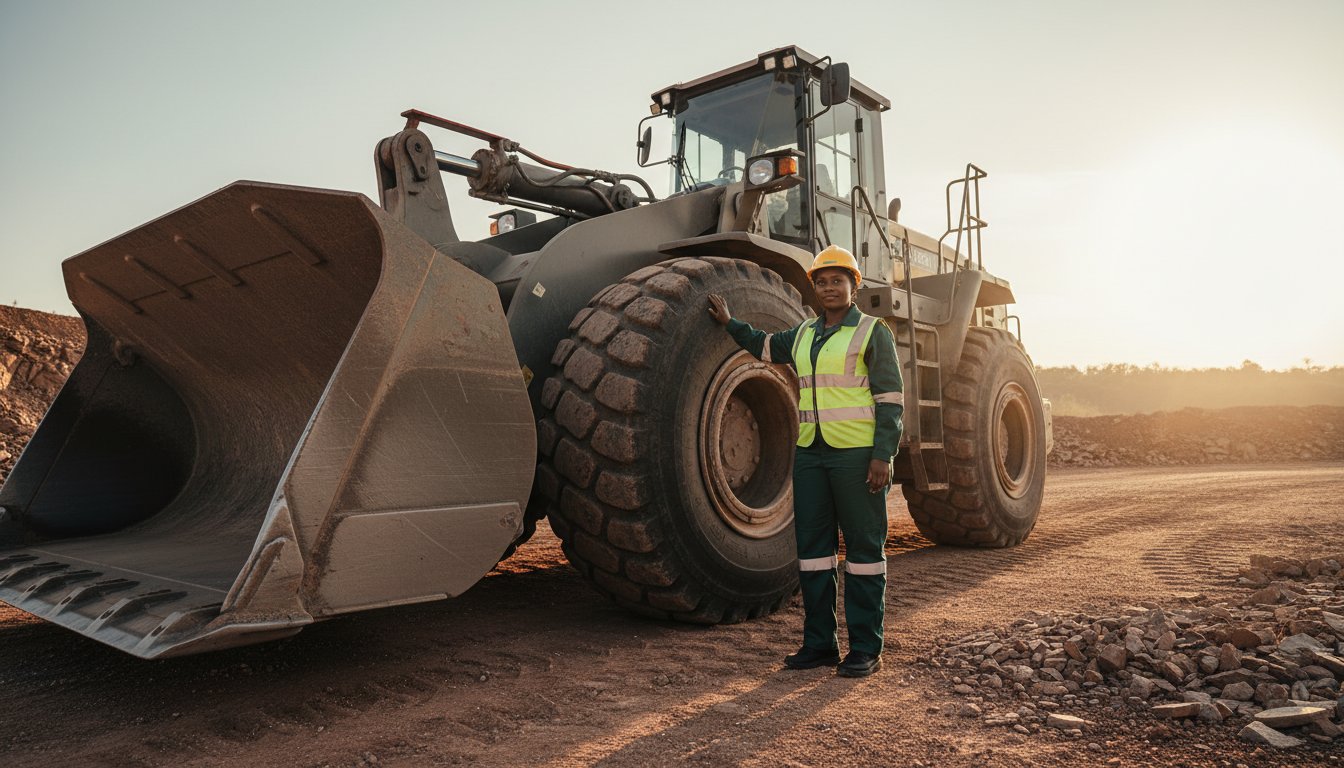
Professional mastery isn't just about moving earth; it's about the silent conversation between a human and a machine. When you embark on heavy equipment operator training zambia, you learn that the quality of your touch dictates the lifespan of the steel. A machine that's forced and strained will eventually cry out in the form of mechanical failure. Conversely, an operator who understands the rhythmic flow of hydraulic fluid can extend a loader's operational life by 20% or more. This deep connection forms the heart of heavy equipment maintenance zambia, where we view every grease point and filter change as a ritual of respect for the power we command.
We advocate for a gentle, meditative approach to heavy logistics. Instead of jerky movements that stress the frame, we teach the "soft start" technique. This method reduces fuel consumption by roughly 12% in haulage operations across the Copperbelt. By treating the machine with a sense of harmony, you ensure that it remains a reliable partner for years. The lifecycle of a machine doesn't end with its first owner; it transitions into a legacy of reliability that holds its value for the next generation of Zambian workers. A machine that's been loved is a machine that lasts.
Stewardship of Used Mining Equipment
Preserving the soul of used mining equipment is a sacred duty for any professional. In the current Zambian market, a well-stewarded 2022 Komatsu excavator can retain a resale value of $45,000 higher than a neglected counterpart. This value is protected through the ritual of post-operation cleaning and inspection. Removing the dust of the mine isn't just about aesthetics; it's about uncovering hidden leaks and protecting the cooling systems. We believe every machine deserves a master who listens to its unique vibrations and treats its components with the same care one would give a delicate instrument. Heavy equipment operator training zambia is the first step in creating this bond of trust.
Your Journey in Heavy Industry
Your path as an operator is a lifelong commitment to mechanical harmony and personal growth. As Zambia’s logistics sector evolves with new 2026 environmental standards, staying updated on electric-drive technology and automated sensors is vital for your career. We encourage you to see yourself as more than a laborer. You're the guardian of the nation’s progress and the protector of its resources. When you operate with a spirit of stewardship, you don't just move soil; you build a sustainable future for your family and the land. Let your hands be steady, your mind be clear, and your machine be a reflection of your inner balance.
Embracing Your Future as a Guardian of the Zambian Landscape
Mastering heavy machinery is a soulful ritual that transforms a simple job into a lifelong path of stewardship. By 2026, the Zambian industrial sector expects a 12% increase in the need for operators who treat their equipment with the same care they'd give a precious resource. Your journey through heavy equipment operator training zambia isn't just about obtaining a certificate; it's about finding harmony between power and precision. This dedication ensures that every road built and every mine excavated contributes to a sustainable future for our communities. Proper training reduces maintenance costs by up to 20%, proving that a mindful operator is a company's greatest asset.
Namayani stands as your partner in this journey, offering more than just steel and engines. We provide nationwide delivery of specialized mining equipment and share our deep expertise in road construction and civil engineering. We're committed to machinery longevity and operator safety, treating every piece of equipment as a living extension of your professional intent. It's time to step into a role where your skill meets our dedication to quality. Explore our range of high-quality machinery and start your journey of stewardship with Namayani. Your path toward a balanced and prosperous career begins with a single, mindful step today.
Frequently Asked Questions
What is the minimum educational requirement for heavy equipment training in Zambia?
You need a Grade 12 School Certificate with at least five "O" level passes, including English and Mathematics, to begin your journey. This academic foundation allows you to understand the technical soul of the machinery and follow the safety rituals required for heavy equipment operator training zambia. Most TEVETA-accredited institutions in 2026 won't accept applicants without these core results. It's a way to ensure every operator brings a sharp, prepared mind to the earth they'll be shaping.
How long does a typical heavy equipment operator course take?
A standard certification course usually lasts between 14 and 30 days of focused, hands-on practice. This timeframe allows your hands to find their natural rhythm with the machine's controls through 80 hours of supervised operation. While the basic movements are learned quickly, true mastery of the machine's heartbeat often requires a longer 3-month apprenticeship. This slower pace respects the complexity of the earth you'll move and ensures your skills are deeply rooted and sustainable.
Is a standard driving license enough to operate a haul truck on a mine site?
No, a standard Class B license isn't sufficient for the powerful presence of a 400-ton haul truck. You must hold a Class T license and pass a site-specific induction that includes a 48-hour safety assessment. Mining environments demand a higher level of awareness and a specialized permit issued by the specific mine's safety department. Operating these giants is a sacred responsibility that goes beyond basic road rules; it requires a total connection with the environment.
What is the average cost of heavy equipment operator training nationally?
An investment in your professional growth typically ranges from ZMW 5,200 to ZMW 9,800 for a single machine certification. This sum covers your learning materials, protective gear, and the 40 hours of fuel needed for your practical sessions. Around 70% of training centers now offer modular payment plans to help you maintain your inner peace while you study. We believe that financial clarity is the first step toward a balanced and successful career in harmony with Zambia's growth.
Are there specific certifications required for underground mining vehicles?
Yes, you'll need a specialized Underground Mining Certificate and often a blasting license if your role involves proximity to explosives. These 2026 regulations require an additional 120 hours of training in confined space navigation and low-light operations. Working beneath the earth's surface is a delicate dance that requires specific knowledge of ventilation and structural integrity. It's a deep commitment to safety that ensures every operator returns to the sunlight at the end of their shift.
Can I get specialized training for used machinery purchased from Namayani?
We provide bespoke 5-day training workshops for every piece of pre-loved machinery that finds a new home through our care. Our experts focus on the unique personality and mechanical heartbeat of your specific machine, ensuring your heavy equipment operator training zambia experience is deeply personal. We believe in building a lasting bond between the operator and the metal. This fosters a sense of stewardship and mutual respect that helps the machine live a long, productive life.
How often do I need to renew my operator certification in Zambia?
You must renew your operator competency certificate every 2 years to stay in harmony with national safety standards. This renewal process involves a 1-day refresher course and a medical examination to ensure your senses remain sharp and your spirit is fit for the task. Staying current with these cycles is essential for maintaining your professional standing in the 2026 job market. It's a regular check-in that honors your personal growth and the safety of those working alongside you.
What are the most in-demand heavy machines for operators in 2026?
Hydraulic excavators and articulated dump trucks remain the most sought-after companions in the Zambian mining and construction sectors. Recent data from the 2025 Chamber of Mines report shows a 15% increase in demand for skilled drill rig operators as new copper projects expand. Mastering these machines allows you to participate in the country's development while earning a stable living. These tools are extensions of your own strength, helping to shape the landscape with precision, care, and intention.